
I play tennis several times a week at a solid but unspectacular 4.0 level. I win more points with placement and patience than with power. Over the years the game has taught me as much about hair as it has about footwork.
The lesson is simple: consistency beats intensity.
The pull of the dramatic fix
In tennis it is tempting to believe that one new racket or one aggressive technical change will suddenly elevate your game. In hair care the equivalent is the intensive treatment or the complete routine overhaul that promises to transform everything at once. Both feel productive. Both often disappoint.
I have watched players rebuild their serves every few months without giving any version time to become reliable. I have also watched people cycle through clarifying treatments, protein masks, and new product lines every two weeks. High intensity, low continuity, limited progress.
What consistency looks like
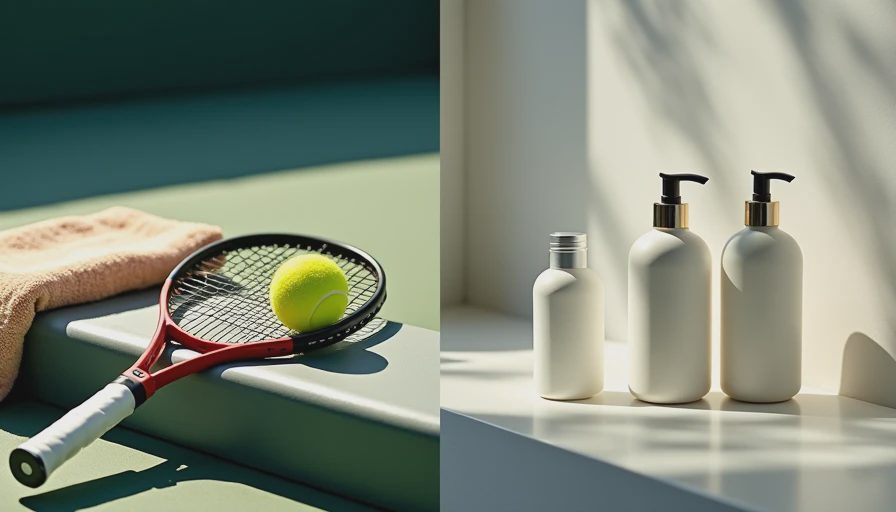
The players who improve steadily are usually the ones who repeat the fundamentals even when it feels ordinary. Hair responds the same way. The routines that work long-term are rarely the most elaborate. They are the ones you can sustain: a shampoo that cleans without stripping, a conditioner that gives enough slip for your hair type, and a leave-in or styler you will actually use.
Intensive treatments still have a place — a clarifying wash when buildup is real, a stronger mask after chemical or heat stress. The difference is that these are adjustments within a stable base, not constant replacements for it.
The slow feedback problem
Tennis gives immediate feedback. Hair is slower. The effect of a new product often takes a few wash cycles to become clear, and it can be influenced by weather, water, and previous products. This delay makes it easy to keep changing variables before any of them have had a chance to work.
One useful habit I carried from the court is isolating variables. Change one thing. Give it time. Observe. In hair care that might mean switching only the conditioner for three weeks or adjusting how thoroughly you rinse instead of adding another product.

The practical takeaway
I still read every label. I still notice when a formula is doing something useful or unnecessary. But I no longer chase the idea that the next product will solve what a steady routine has not. Most of the time hair improves when the basics are correct and repeated.
Showing up and doing the ordinary things well is more powerful than occasional bursts of intensity. Hair operates on the same principle. The routine you can maintain will almost always outperform the one you can only sustain for a week.
Read the label before you buy the bottle.


No notes yet — write the first one.