I'm going to start this one with a confession.
For the first three years of my career, I barely thought about pH. I knew the theory. I remembered the high school chemistry definition. But in my day-to-day work, it was just a number we checked at the end of the process – like double-checking that you turned off the stove before leaving the house.
Then one day, a colleague handed me a report from a consumer trial. Two identical formulas. Same surfactants. Same conditioning agents. Same fragrance. The only difference? One had a pH of 5.5. The other had a pH of 7.0.
The results weren't close. The pH 5.5 version scored significantly higher on softness, shine, and manageability. Users described it as "gentler" and "more nourishing" – even though the ingredients were identical.
That was the moment I started paying attention to something I'd previously treated as an afterthought.
The Chemistry Part (Short and Painless)
Let me explain pH without making you feel like you're back in a classroom.
pH stands for "potential of hydrogen." It measures how acidic or alkaline something is on a scale from 0 to 14:
pH Range | What It Means | Examples |
|---|---|---|
0–6.9 | Acidic | Lemon juice (2), coffee (5), skin/scalp (4.5–5.5) |
7.0 | Neutral | Pure water |
7.1–14 | Alkaline / Basic | Baking soda (9), bleach (13), hair relaxers (11–13) |
Here's what matters: every number on the scale represents a tenfold difference.
That means a product with pH 6 is ten times more alkaline than a product with pH 5. A product with pH 7 is one hundred times more alkaline than pH 5.
So when a brand says "pH-balanced," they're telling you that the formulator has adjusted the product to fall within a specific range – usually close to the natural pH of your skin and hair.
The natural pH of your scalp is between 4.5 and 5.5. Your hair itself has a pH of roughly 3.7 to 4.5 when it's healthy and the cuticle is closed.
When you use products that are significantly more alkaline, you're disrupting that delicate balance. And when you disrupt the balance, things start to go wrong.
What Actually Happens When pH Is Off?
Here's where the science gets practical.
When you apply an alkaline product (pH above 7) to your hair:
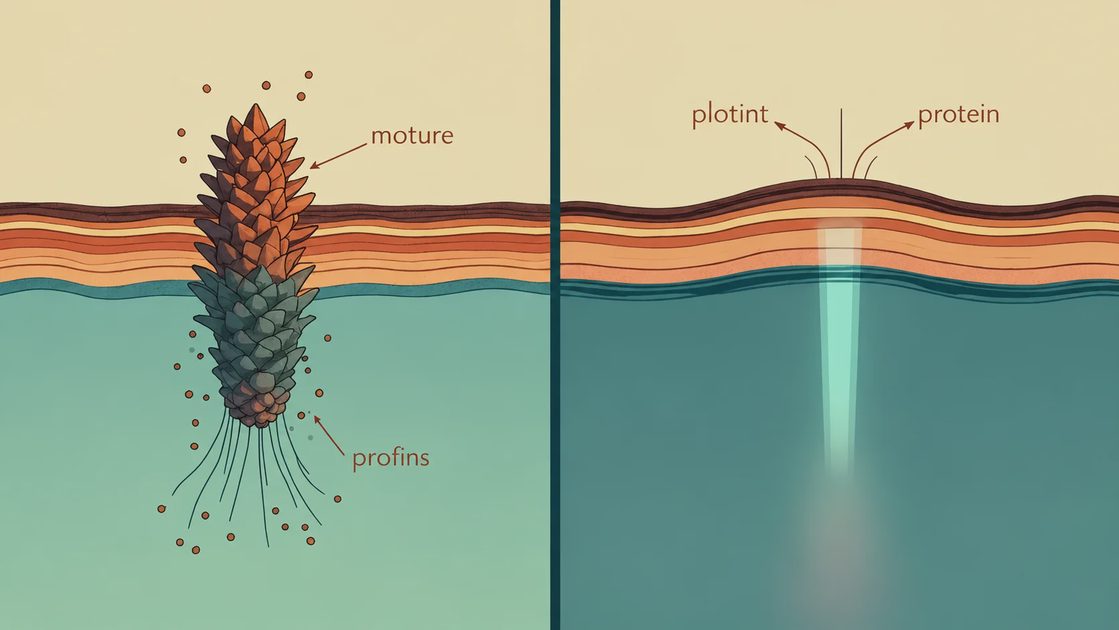
The cuticle – those overlapping protective scales on the outside of each strand – lifts and opens. This is actually intentional in some contexts: hair dye, perms, and relaxers rely on alkaline pH to open the cuticle so chemicals can penetrate the cortex.
But here's the problem: when the cuticle is lifted, it stays lifted. Water can rush in too quickly, causing swelling. Proteins can leach out. The hair becomes more porous, more fragile, and more prone to breakage. And because the cuticle scales are standing up rather than lying flat, light scatters instead of reflecting – which makes your hair look dull rather than shiny.
Over time, repeated exposure to high-pH products can cause cumulative damage that no conditioning product can fully reverse. You've essentially left the door open, and moisture and proteins keep escaping.
When you apply an acidic product (pH below 7) to your hair:
The cuticle contracts and lies flat. This is generally a good thing. The hair retains moisture more effectively, reflects light more evenly, and feels smoother to the touch.
This is why many brands add citric acid or lactic acid to their formulations. These aren't just "natural" ingredients – they're functional pH adjusters that close the cuticle and leave hair feeling smooth.
But there's a catch: if the pH is too low (below 3.0), it can become irritating to your scalp and cause the hair to become brittle over time. There's a sweet spot, and good formulators aim for it.
How I See pH in the Lab
When I was writing formulas, pH was never a standalone decision. It was always considered alongside three factors:
Factor 1: The cleansing system.
Sulfates work best at higher pH levels. That's why many "clarifying" or "deep cleaning" shampoos tend to hover around pH 6.0 to 7.0. It's not that the formulator forgot to adjust the pH – it's that the formula requires that range to function properly. If you lower the pH too much, the surfactant stops lathering.
This is a trade-off: strong cleaning power at the expense of cuticle smoothness.
Factor 2: The conditioning system.
If the product contains cationic conditioners (like cetrimonium chloride or behentrimonium methosulfate), they perform best at lower pH levels (around 4.0–5.5). The positive charge on these ingredients is more effective when the hair's negative charge is more pronounced – which happens at lower pH.
So a well-formulated conditioner will almost always have a lower pH than a shampoo. That's intentional. The shampoo opens the cuticle slightly (or at least doesn't close it completely) and cleanses. The conditioner closes it and smooths it.
Factor 3: Preservative efficacy.
This is the part nobody talks about.
Preservatives like phenoxyethanol, sodium benzoate, and potassium sorbate have pH ranges where they're most effective. Outside those ranges, they lose potency and the product can grow mold or bacteria.
Here's the catch: many "natural" preservatives work best at acidic pH levels. But a shampoo that's too acidic won't lather well. So the formulator has to choose between a product that cleanses effectively or one that's preserved effectively – and find a compromise.
This is why I always side-eye "preservative-free" claims. Unless the product is bone-dry (like a powder) or completely water-free (like a solid oil bar), it needs something to prevent contamination. "Preservative-free" in a water-based product isn't a virtue – it's a ticking clock.
Which pH Is Right for Your Hair?
I can't give you a single number, because different products have different jobs. Here's a quick guide:
Cleansers (shampoos): The ideal shampoo pH is between 5.0 and 6.5. Below 5.0, the lather may be poor. Above 6.5, the cuticle starts opening. Most well-formulated shampoos fall somewhere in this range.
Conditioners: The ideal conditioner pH is between 3.5 and 5.0. This is the "sweet spot" where cationic conditioners work best and the cuticle lies flat.
Treatments and masks: Protein treatments often work at slightly higher pH levels (around 5.0–6.0), because the protein molecules need to bind to the hair. But they should always be followed by a lower-pH conditioner to close the cuticle back down.
Acid rinses: Some people do a final rinse with vinegar or lemon juice diluted in water. The pH of that mixture is typically around 3.0–4.0, which can effectively close the cuticle and add shine. Done occasionally, it's safe. Done daily, it's likely to cause irritation.
Relaxers and perms: These are intentionally alkaline, with pH levels ranging from 9.0 to 11.5. They're designed to break bonds and permanently reshape your hair. This is a chemical service, not a conditioning one. The alkaline pH is necessary to get the job done – but that's also why these services can be so damaging if not done properly.
Where pH Gets Misused in Marketing
Here's the thing: "pH-balanced" has become a marketing buzzword. And when that happens, brands start to stretch the truth.
Claim 1: "pH-balanced for healthy hair."
What does that even mean? Balanced relative to what? Your scalp? Your hair? The product itself?
Most shampoos are balanced to a pH around 5.5–6.0. That's common. It's not a unique selling point. It's just normal formulation practice.
If a brand is making a big deal about being pH-balanced, the question I'd ask is: balanced to what, and why should I care?
Claim 2: "pH 7.0 – Neutral and gentle."
This one drives me crazy. Neutral isn't gentle. Your hair and scalp are naturally acidic. A pH of 7.0 is actually more alkaline than your scalp's natural state. It's not doing you any favors. It's just easier to market because "neutral" sounds friendly.
Claim 3: "Acidic pH for shine."
Yes, acidic pH can close the cuticle and add shine. But the phrase "acidic pH" is meaningless without a number. pH 6.0 is acidic. So is pH 2.0. The first is fine for your hair. The second is acetic acid (vinegar) at full strength and will melt your hair off.
How to Test Your Product at Home
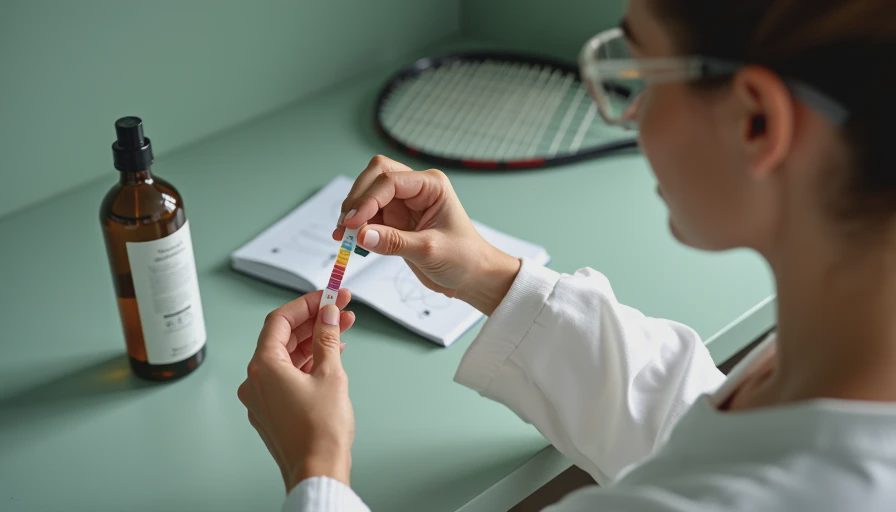
If you're curious about the pH of your products, you can buy pH testing strips online for a few dollars. They work on liquids, so they'll test your shampoo and conditioner.
Here's what to look for:
Shampoo: 5.0–6.5. Acceptable range. If it's above 7.0, use it sparingly or only for deep-cleaning purposes.
Conditioner: 3.5–5.0. Acceptable range. If it's above 6.0, it's probably not doing much to close your cuticle.
Leave-in products: 4.0–5.5. Acceptable range.
I should add a caveat: testing strips aren't perfectly accurate on products with colorants or high oil content. They'll give you a ballpark, not a laboratory-grade measurement.
But here's what I actually want you to know about pH testing at home: for almost everyone, it's unnecessary. Your hair will tell you if the pH is off. If your shampoo leaves your hair feeling rough and dry, the pH might be high. If your conditioner leaves it feeling slippery and smooth, the pH is probably in the right zone.
The product speaks for itself. The label just tells you the story.
Read the label before you buy the bottle.
No notes yet — write the first one.