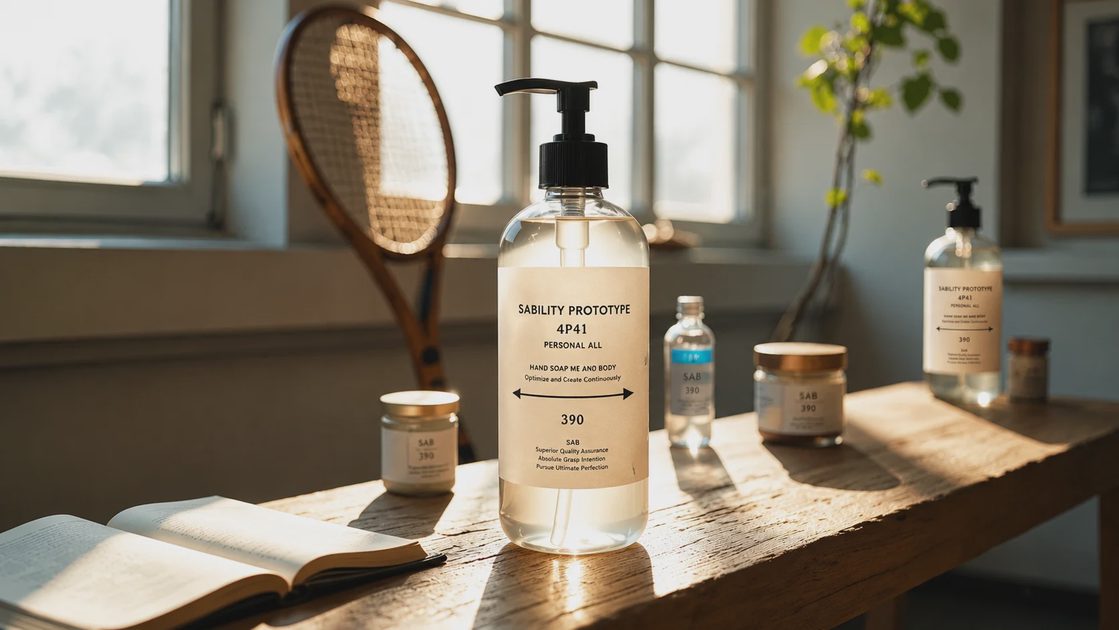
When a shampoo looks the same six months after you bought it — same texture, same scent, same color — that is not an accident. It is the result of a stage in development that rarely gets mentioned in marketing: stability testing.
Most consumers never hear about it. Yet it is one of the main reasons some formulas reach the shelf and others remain forever in a laboratory notebook.
What stability testing actually is

Stability testing is the process of deliberately stressing a formula to see whether it holds together over time and under different conditions. In the lab we prepare multiple samples of a prototype and place them in controlled environments: elevated temperature (often 40°C or 45°C), room temperature, cold storage, and sometimes freeze-thaw cycles. Some samples are exposed to light. We then evaluate them at set intervals — two weeks, one month, three months, and beyond.
We look for changes in viscosity, color, fragrance, pH, and appearance. Does the product separate into layers? Does it become watery or overly thick? Does the fragrance turn sour or fade? Does the color shift? Is the preservative system still protecting against microbial growth? Any significant change can send the formula back for adjustment.
Why this stage exists
A formula that performs beautifully on the day it is mixed can still fail later. Heat can accelerate chemical reactions. Cold can cause ingredients to crystallize or separate. Light can degrade certain colorants and fragrances. Even the packaging can interact with the formula over time, slowly leaching materials or allowing evaporation.
Without stability testing, a product might look and feel perfect in the first week and then separate, thin out, or spoil by the time it reaches a customer. The testing is not glamorous, but it is one of the primary filters between a promising lab batch and a product that can survive shipping, warehouse storage, and months on a bathroom shelf.
What failure looks like

Failures come in different forms. Some are obvious: the product splits into an oily layer and a watery layer. Others are subtler. Viscosity may drop so the shampoo becomes runny and hard to apply. Fragrance can shift in a way that makes the product smell “off.” Color may darken or fade. In worse cases, the preservative system proves insufficient and microbial growth appears.
Each type of failure points to a different problem — emulsifier choice, surfactant compatibility, fragrance load, preservative efficacy, or packaging interaction. Fixing one issue can sometimes create another, which is why stability work is often iterative and time-consuming.
The quiet compromises
Stability requirements influence the final formula in ways that are invisible on the ingredient list. A beautiful natural fragrance may be reduced or replaced because it proved unstable. A high level of a conditioning ingredient may be lowered because it caused the viscosity to drift. A packaging design may be changed because the formula interacted with a particular plastic. These decisions are rarely advertised, yet they shape the product you eventually buy.
This is also why two products with similar ingredient lists can behave differently over time. The exact percentages, the grade of each raw material, the processing method, and the packaging all affect long-term stability. The list on the back of the bottle shows what survived the process; it does not show what was altered or removed along the way.
What this means for you
You cannot perform laboratory stability testing at home. You can, however, observe how a product behaves after you open it. Notice whether the texture stays consistent, whether the scent remains pleasant, and whether the product continues to perform as it did in the first weeks. Significant changes — separation that does not remix, a sudden drop in thickness, or an off smell — are signs that the formula is no longer in its intended state.
Knowing that stability testing exists also helps explain some of the conservatism in commercial formulas. Ingredients and combinations that look exciting on paper are sometimes avoided because they fail these quiet, long-term tests. The products that reach the shelf have already been asked to endure conditions more demanding than most bathroom cabinets.
Stability testing will never appear as a marketing claim. It leaves no glamorous trace on the label. Yet it is one of the main reasons the shampoo you buy today still looks and feels like shampoo three months from now. The next time a product remains consistent from the first use to the last, you are seeing the result of work that happened long before the bottle was filled.
Read the label before you buy the bottle.

No notes yet — write the first one.