
There's a step in formula stability testing that almost nobody outside a lab knows about: the comb test.We'd take hair swatches made from the same batch of formula — wet, dry, damaged, healthy — and run a standard comb through each one a fixed number of times, then count how many strands broke. That number is how we measured a formula's slip and its resistance to breakage.
Eight years into formulating, I came around to something I hadn't expected: the formula is the skeleton. The comb is the last hand it passes through — and that's often what decides whether the effect actually reaches your hair, or gets lost right before it does.
If a comb snags, tugs, or throws static, it doesn't matter how much conditioner or hair mask you layer on top — a good chunk of that effect gets cancelled out before it has a chance to work. It's the same problem as buying excellent flour and then cutting the bread with a dull knife. The flour isn't the issue. The tool is.
And almost nobody teaches you how to pick one. Hair blogs will walk you through ingredients, through routines, down to the molecule — but the comb itself, the most basic tool in the whole process, gets skipped.
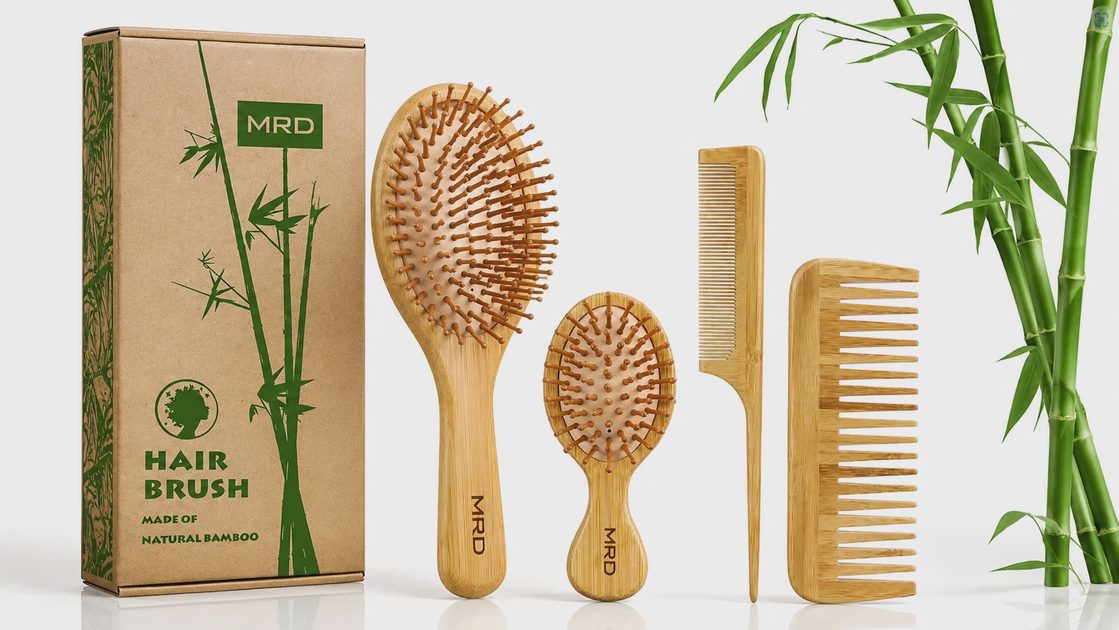
So when I came across MRD's bamboo hair brush set, I decided to actually look at it properly. A few details on the product page told me this brand at least understood what it was building.
Where the Set Actually Delivers
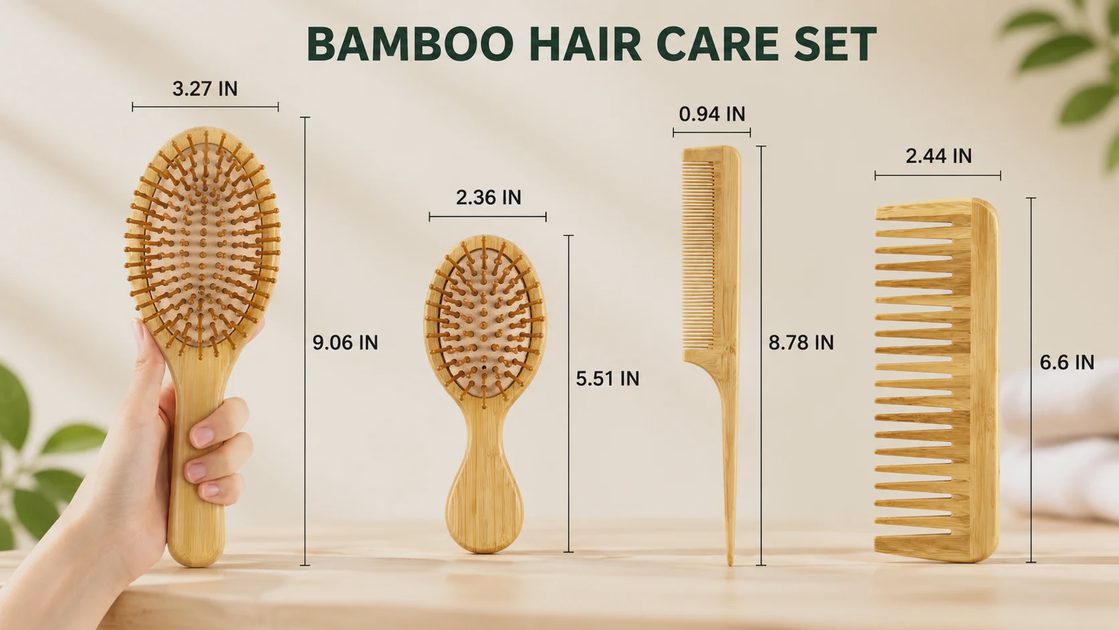
Let's start with the conclusion: this isn't some breakthrough piece of engineering. It's a well-made, sensibly designed bamboo brush set — four pieces, currently priced at $14.99 — a standard-size detangling paddle brush, a mini travel brush, a wide-tooth comb, and a tail comb. Buying the pieces separately would likely cost close to double, which is where the set actually earns its value.
But "sensible" is doing more work here than it sounds like it should — that word is rarer in hair tools than you'd expect.
Material. The whole set is made from real bamboo — not a bamboo-print laminate, not compressed bamboo dust, actual bamboo. Bamboo runs denser and harder than most standard woods, with a smoother surface that's less prone to snagging on strands, meaning less friction against hair. And unlike plastic bristles, bamboo teeth don't build up static during use — a real, practical advantage if you're dealing with frizz-prone hair.
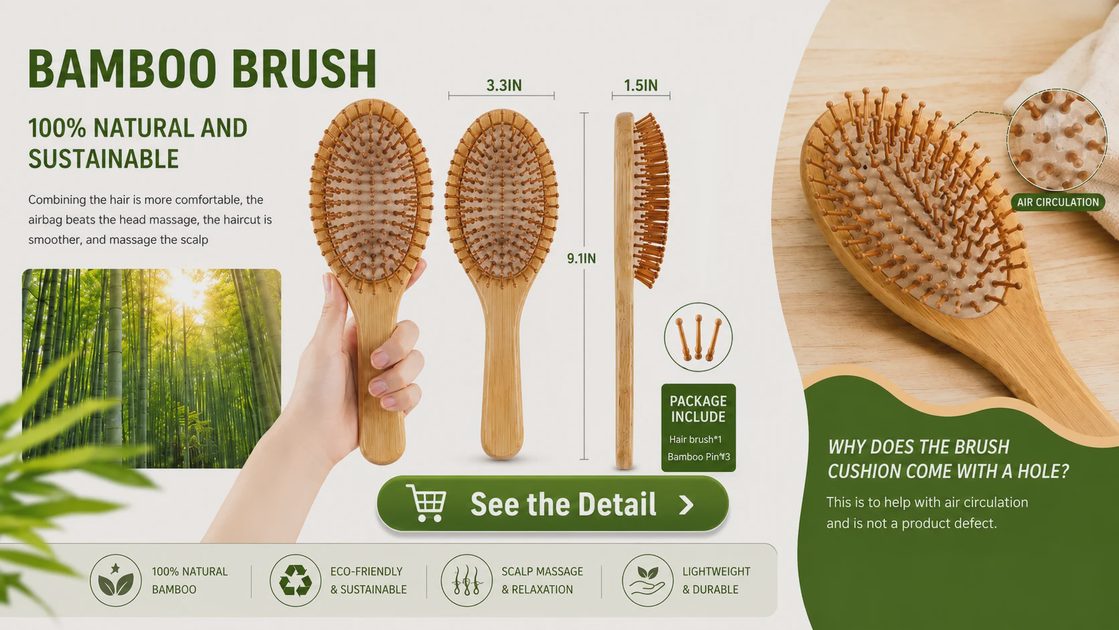
Design. The bristle tips are rounded, so brushing the scalp stimulates blood flow rather than scraping at the skin. The wide-tooth comb is built for the first pass through wet hair, spreading tension out to avoid the breakage a narrower tool would cause. The tail comb handles styling, parting, and precision sectioning. Together, the four pieces cover the full arc from wet detangling to daily smoothing to styling — nothing missing.
The one detail worth calling out. The cushion on the paddle brush has a small ventilation hole punched through it. The reasoning: if the cushion were fully sealed, moisture would get trapped inside, and over time that leads to warping or mildew. The hole also gives the pad a bit of give — a slightly softer cushion feel as the bristles pass over the scalp. This is all spelled out on the product page, which not every brand bothers to do.
Using the Set, Piece by Piece
Each of the four pieces does a distinct job — they're not four sizes of the same tool:
Scalp massage brush — the workhorse. Best on damp-to-dry hair; more about stimulating the scalp and distributing oil evenly than detangling.
Mini travel brush — genuinely useful, not just a bundling gimmick. Same bristle logic, smaller footprint, actually fits a bag.
Wide-tooth comb — the one I reach for on wet hair first; the wider spacing puts less pulling tension on strands than a brush would.
Tail comb — for parting and styling, not something I'd use for everyday detangling.
A few weeks in, my own experience lines up with what others using the hair brush set have reported: noticeably gentler on the scalp, and visibly less breakage than with the plastic brush it replaced. The one thing I'd flag is the wide-tooth comb — it's the thinnest, most directly-loaded piece in the set, and under real pressure on a stubborn knot, you can feel the teeth flex more than the other three pieces do. Not a surprise, but worth knowing before you reach for it.
Let's be real
Bamboo isn't free of trade-offs, either. Compared to plastic, it's less flexible, so lateral pressure or an accidental drop — especially on the finer teeth of the wide-tooth comb — is more likely to cause a break than it would on a plastic equivalent; a few reviewers have mentioned the same thing. Bottom line: this is a comb that wants slightly gentler handling — dry it after use, keep it somewhere dry, don't toss it into a bag loose with your keys and coins — and daily use holds up fine under that. Every material has its temperament. What bamboo trades for that is a lighter feel in the hand, less static, and a more natural sensation against the scalp.
Where I Land
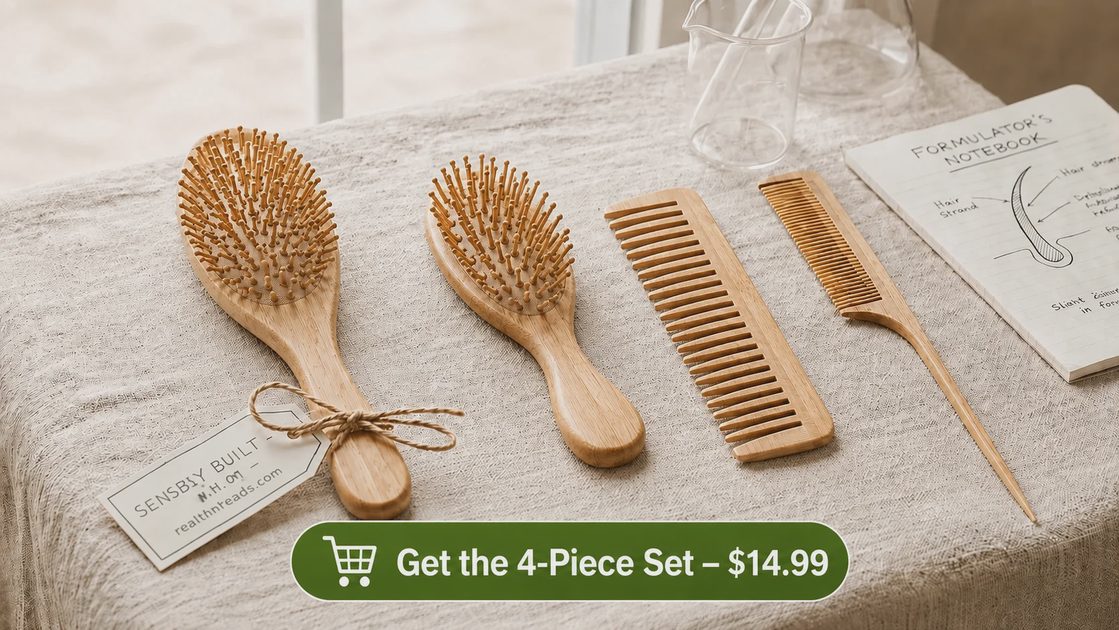
I'm not going to tell you a fifteen-dollar brush set is going to transform your hair health — that's exactly the "spend more, get more" logic this blog exists to push back on. What I can tell you is narrower and more useful: it doesn't work miracles on damaged hair, and there's no clinical study behind it. What it is: a bamboo brush and comb set, sensibly built — $14.99, gentle on detangling, good on the scalp, low on static, and workable across hair types.
Read the label before you buy the bottle.


No notes yet — write the first one.