The first time I read a shampoo label as a professional formulator, I was standing under a fluorescent lab light with a pipette in one hand and a notebook in the other. Today, I read shampoo ingredients in grocery aisles, drugstores, and hotel bathrooms for the same reason: the label tells you more than the front of the bottle. It can show whether a product is designed to cleanse gently, remove heavy buildup, support a dry scalp, or simply smell expensive.
A long ingredient list is not automatically a bad one. In fact, a useful shampoo often needs cleansers, conditioning agents, thickeners, preservatives, fragrance, and pH adjusters to work safely and consistently. The trick is learning what each group does and deciding whether it fits your hair and scalp.
How to read shampoo ingredients in order
Cosmetic labels generally list ingredients from the highest amount to the lowest, although ingredients present at 1% or less can appear in a less predictable order. Water is often first because shampoo is mostly water. After that, you may see cleansing agents, such as sodium laureth sulfate, sodium lauryl sulfate, cocamidopropyl betaine, sodium cocoyl isethionate, or decyl glucoside.
These names are not a simple good-versus-bad test. Sodium lauryl sulfate is a strong cleanser that can be useful for oily scalps or occasional clarifying. Sodium laureth sulfate is typically milder in feel, while cocamidopropyl betaine is often paired with another cleanser to soften the overall wash. Sulfate-free formulas can still cleanse effectively; they simply use a different surfactant system.
Look next for the supporting ingredients. Glycerin attracts water and can help hair feel less dry. Polyquaterniums improve combability and reduce static. Guar hydroxypropyltrimonium chloride is a conditioning polymer that can make wet hair feel smoother. Citric acid usually adjusts pH rather than delivering a dramatic hair benefit. This is why shampoo ingredients should be read as a team, not judged one by one.
What shampoo ingredients do for your scalp
Your scalp is skin, so the cleansing experience matters as much as the finished look. If your roots become oily by the next morning, a formula with stronger surfactants or a clearer, lighter texture may work better than a rich co-wash. If your scalp feels tight after washing, consider a gentler cleanser, a shorter wash, and lukewarm water instead of very hot water.
For visible flakes, first identify what you are trying to manage. A cosmetic shampoo can loosen surface flakes and remove oil, but products containing ingredients such as ketoconazole, selenium sulfide, zinc pyrithione, or salicylic acid are used in specific dandruff products. Availability and labeling differ, and persistent itching, redness, sores, or heavy scaling deserves advice from a dermatologist rather than endless product swapping.
Fragrance is another practical consideration. “Fragrance” or “parfum” represents a mixture of aromatic materials, and it is not automatically harmful. However, a fragranced formula may be a poor match for a reactive scalp. Essential oils, including peppermint, tea tree, and citrus oils, still contain fragrant compounds. Natural does not mean irritation-proof, and “clean” is not a scientific category.
Shampoo ingredients for dry, damaged, or curly hair
Hair that is bleached, heat-styled, curly, or naturally coarse often benefits from more conditioning support. Scan for fatty alcohols such as cetyl alcohol, stearyl alcohol, and cetearyl alcohol. These are not the same as drying alcohols like ethanol or denatured alcohol. Fatty alcohols help provide slip, creaminess, and a softer after-feel.
Silicones are also frequently misunderstood. Dimethicone, amodimethicone, and dimethiconol can reduce friction, improve shine, and help protect the hair surface during combing. They do not repair a broken fiber permanently, but they can make damaged hair easier to manage. If a silicone-rich routine leaves your hair flat or coated, occasional cleansing or a lighter conditioner can solve the problem.
Proteins such as hydrolyzed wheat protein, hydrolyzed keratin, and hydrolyzed rice protein can add temporary structure and body. Some people love that stronger feel; others find frequent protein-heavy products stiff or rough. Humectants, oils, proteins, and polymers all contribute differently, so the best formula depends on how your hair responds after several washes, not on a single trending ingredient.
A simple label comparison at the store
Imagine two bottles. Bottle A begins with water, sodium laureth sulfate, cocamidopropyl betaine, glycerin, sodium chloride, fragrance, and a small amount of conditioning polymer. It is likely a straightforward cleansing shampoo with moderate foam and a relatively light finish. That can suit fine hair or an oily scalp.
Bottle B begins with water, sodium cocoyl isethionate, cocamidopropyl betaine, glycerin, cetearyl alcohol, polyquaternium-10, several oils, fragrance, and preservatives. It may feel creamier and less stripping, making it attractive for dry or textured hair. It might also leave fine hair less buoyant if used too often.
Neither list wins automatically. Ask three questions: Does my scalp need stronger or gentler cleansing? Does my hair need slip and softness? Will the fragrance, essential oils, or active ingredients bother me? This method is more reliable than choosing a bottle because it says “repair,” “detox,” or “botanical.”
Preservatives, fragrance, and ingredients people fear
Preservatives are necessary in most water-based shampoos because water can support microbial growth. Common examples include phenoxyethanol, sodium benzoate, potassium sorbate, and benzyl alcohol. Their presence does not mean the product is unsafe; their job is to keep the formula from becoming a contaminated bottle in your shower.
Likewise, parabens are preservatives with a long history of use, while “paraben-free” describes a marketing choice rather than proof that a product is gentler. A replacement preservative system can be perfectly reasonable, but it still needs to be evaluated as part of the entire formula. I used to believe every “free-from” claim deserved applause. After working on real stability testing, I learned to ask what replaced the removed ingredient.
Do not ignore packaging and use instructions. A pump bottle can reduce repeated water entry compared with an open jar, though good preservation remains the key factor. Keep shampoo closed, avoid adding water to stretch it, and discard it if the smell, color, or texture changes noticeably.
Build a routine from the whole formula
Start by separating scalp care from hair-length care. Massage shampoo mainly into the scalp, where oil and sweat collect, and let the rinse clean the lengths. Apply conditioner from the mid-lengths to the ends unless your stylist has recommended another approach. Washing twice can help after heavy styling products, but it is not mandatory every time.
Give a new product two or three washes unless irritation appears immediately. Record simple observations: how quickly roots look oily, whether the scalp feels tight, how easily wet hair combs, and whether the ends feel coated. If the result is poor, change one variable at a time so you know what helped.
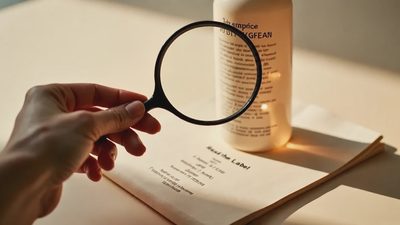
The most useful shampoo ingredients are the ones that create a balanced formula for your actual routine. You do not need to memorize every chemical name. Learn the main cleanser, look for conditioning support, notice fragrance and active treatments, and ignore fear-based claims. Read the label before you buy the bottle; it is usually the clearest explanation you will get.


No notes yet — write the first one.