At the lab bench, I learned that hair products with uv protection are not all doing the same job. Some form a light film over the cuticle, some reduce the drying feel that follows sun exposure, and others mostly offer a pleasant marketing phrase. If you spend weekends outdoors, color your hair, or notice that your ends become rough by August, learning to read the label is more useful than buying the most expensive bottle.
Hair fiber is not living skin. It cannot repair itself after ultraviolet exposure, because the strand is made of keratinized cells rather than active tissue. Sunlight can still weaken the protein structure, fade artificial color, and make the cuticle feel porous. The goal of a good product is not to create an invisible force field. It is to reduce exposure and help the strand remain lubricated, flexible, and easier to comb.
What UV exposure does to the hair fiber
Ultraviolet light reaches the outer cuticle first, but the effects are easy to notice throughout the strand. Repeated exposure can oxidize some of the hair’s natural pigment and contribute to brassier-looking blonde, gray, or highlighted hair. Chemically treated hair is often more vulnerable because bleaching and permanent color already change the fiber’s internal structure.
The sun also warms the hair and evaporates water from the surface. That does not mean every dry-feeling strand is dehydrated in a simple, fixable way. Hair does not drink water like a plant. Instead, water temporarily changes how the fiber swells and behaves. A conditioning film containing fatty alcohols, silicones, oils, or cationic ingredients can make the strand feel smoother and reduce friction after washing.
This is where hair products with uv protection can be helpful. They are best understood as maintenance products, not treatments that reverse damage. A leave-in conditioner, protective spray, or styling cream can make brushing gentler and help prevent the small mechanical breaks that accumulate when sun-exposed hair is already rough.
How to read the protection claim
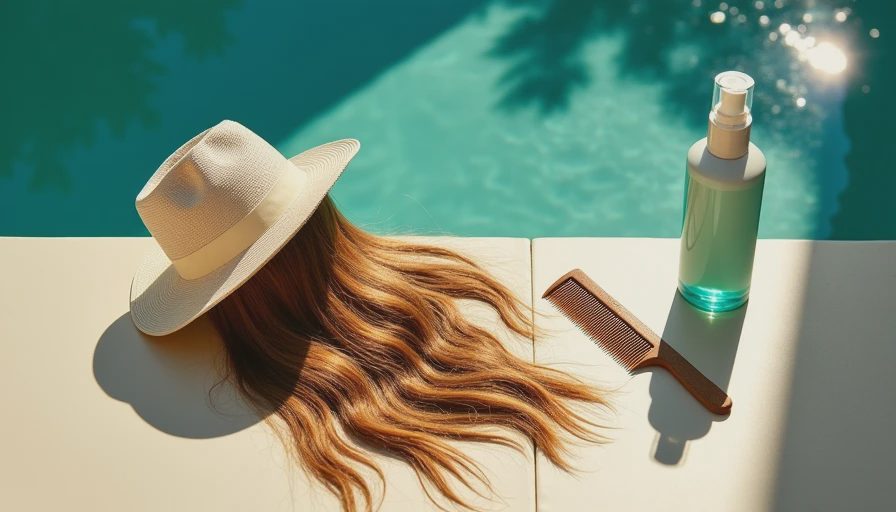
The phrase “UV protection” does not automatically tell you how much protection a product provides. Haircare labels generally do not use the same standardized SPF system used for skin sunscreens, and a styling product may support color retention without blocking every ultraviolet wavelength. Look for a clear description of the product’s purpose, such as protection from environmental stressors, color fade, or heat and UV exposure.
Then read the ingredient list. Film-formers are often useful because they leave a coating on the fiber. Depending on the formula, you might see acrylates copolymers, polyquaterniums, VP/VA copolymers, or silicone ingredients such as amodimethicone and phenyl trimethicone. These names are not automatically good or bad. Their performance depends on concentration, the rest of the formula, and how often you wash.
Some formulas also include specific UV-absorbing ingredients. Examples can include benzophenone derivatives, ethylhexyl methoxycinnamate, or other cosmetic ultraviolet filters, although the exact options vary by country and product category. A filter near the end of the list may still contribute, but ingredient order gives you useful context. Also look for conditioning agents such as behentrimonium chloride, cetrimonium chloride, cetyl alcohol, or stearyl alcohol. These are not drying alcohols; fatty alcohols help create slip and softness.
Choosing hair products with uv protection for your routine
The best hair products with uv protection depend on how your hair behaves before and after washing. Fine hair usually does better with a mist or lightweight leave-in applied from mid-length to ends. Start with two or three sprays, comb through, and add more only if the hair still feels rough. Applying a rich cream at the roots can flatten fine hair and make the scalp look oily without improving the ends.
Thick, curly, coarse, or highly porous hair often benefits from a cream or leave-in conditioner. These textures have more surface area and can lose their smooth feel quickly in dry weather. Look for a formula with conditioning polymers, fatty alcohols, and oils such as argan, jojoba, or sunflower seed oil. Oils do not replace a UV filter, but they can improve lubrication and reduce the drag that makes curls frizz during detangling.
For color-treated hair, combine a leave-in product with physical habits. A wide-brimmed hat, scarf, or shaded route gives more dependable coverage than any cosmetic formula alone. If you swim, rinse with fresh water first so the hair absorbs less chlorinated or salty water. Apply your leave-in afterward and reapply when the hair has been towel-dried or exposed to several hours of direct sun.
Hair products with uv protection versus heat protectants
These categories overlap, but they are not interchangeable. A heat protectant is designed and tested around hot tools such as a flat iron, curling iron, or blow dryer. It usually focuses on reducing heat transfer and friction at specific temperatures. A UV-focused product is intended for outdoor exposure and may focus more on color, surface coating, and environmental stress.
Some products are labeled for both heat and UV protection. That can be convenient, but read the directions carefully. A spray that works well before blow-drying may not provide enough conditioning for a long beach day. Conversely, a buttery styling cream may protect the feel of the hair outdoors but leave a heavy residue when used before a hot iron.
I once preferred a very light spray for nearly everyone because it felt elegant and disappeared quickly. After testing it on porous, highlighted hair, I changed my view: the spray worked as a refresh, but a richer leave-in was needed after washing. The lesson was simple. Texture and damage level matter more than a glamorous claim on the front label.
A practical application method
Start with clean, damp hair and remove excess water with a towel. Place a small amount of product in your palms, or spray it into your hands if the mist is difficult to control. Work from the ears downward, concentrating on the mid-lengths and ends. Use a wide-tooth comb to distribute it evenly, especially if your hair is curly or tangles easily.
If you are going outside later, apply enough to lightly coat the hair without soaking it. More product is not automatically more protection. A heavy layer can attract dust, make fine hair limp, and encourage you to shampoo aggressively at night. For a long outdoor event, refresh the ends after several hours, particularly if your hair has been rubbed by a hat, backpack strap, or swimsuit.
Keep your expectations realistic. Hair products with uv protection cannot restore split ends or turn heavily bleached hair back into virgin fiber. They can make the surface smoother, improve combability, and support the appearance of color over time. Trimming damaged ends and using a regular conditioner still matter.
Common label mistakes to avoid
Do not reject every product containing silicone. Some silicones rinse away easily, while others deposit selectively on damaged areas and provide valuable slip. If buildup bothers you, use your normal shampoo consistently rather than buying a harsh cleanser as punishment. People with curls or very dry hair may prefer less frequent washing, so their ideal formula will differ from someone with fine, oily hair.
Do not assume a product with “natural oils” offers meaningful UV protection. Sunflower, coconut, argan, and jojoba oils can condition, but the oil itself is not proof of a tested ultraviolet claim. Similarly, a fragrance described as tropical or beachy has no protective function. Read the ingredient panel before the mood-setting language.
Finally, judge the product after several uses. Hair should feel easier to detangle, not coated in a waxy film. If your ends remain rough, change the amount, placement, or product type before blaming the entire category. The smartest hair products with uv protection are the ones you can apply evenly and use often enough to matter.
My short buying rule is this: choose a formula that matches your texture, look for a credible UV or environmental-protection claim, and treat the ingredient list as evidence rather than decoration. A hat remains the strongest physical barrier, but the right leave-in can make everyday sun exposure easier on your strands. Read the label before you buy the bottle.





No notes yet — write the first one.