Fermentation of rice water has become a familiar DIY hair-care ritual, usually presented as a shortcut to stronger, shinier, longer-looking hair. I understand the appeal: rice is inexpensive, the method feels wonderfully simple, and a cloudy bottle looks reassuringly natural. But natural does not automatically mean gentle, stable, or effective. The useful question is not whether the internet loves it. The useful question is what is actually in the water, how fermentation changes it, and whether your hair needs that kind of treatment.
What fermentation changes in rice water
Rice water begins as water containing small amounts of starch, minerals, and compounds released from the grain. During fermentation, microorganisms consume some available sugars and produce acids and other byproducts. That can lower the liquid's pH and create a sour smell. The exact result depends on the rice, water, temperature, time, and microbes already present in the container.
This matters because hair is happiest with products formulated within a mildly acidic range. A lower-pH rinse can temporarily help the cuticle lie flatter, which may make hair feel smoother and look more reflective. However, a fermented rinse is not a controlled conditioner. Its pH is rarely measured, its microbial population is unknown, and its composition changes as it sits.
The starch is also important. Starch can leave a temporary film on the hair, making strands feel fuller or less slippery. That effect is not the same as repairing a damaged cuticle. Hair fiber is nonliving tissue; no rinse can rebuild a broken strand from within. A good result usually means the surface feels different, not that the biology of hair growth has been changed.
For context, the fermentation of rice water is not the same as adding a proven cosmetic ferment to a shampoo. Commercial ingredients such as fermented plant extracts are produced under controlled conditions, then tested for identity, contamination, stability, and compatibility with the finished formula. A kitchen jar has none of those safeguards.
How to make a safer small batch
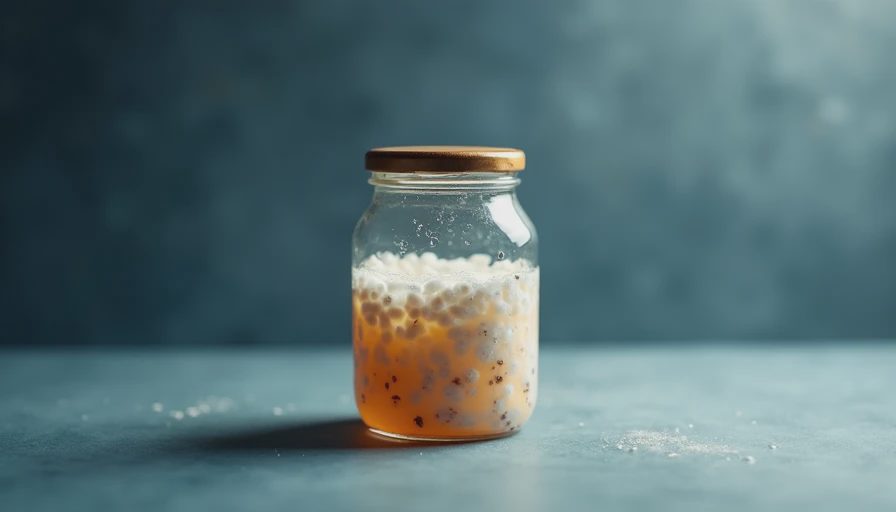
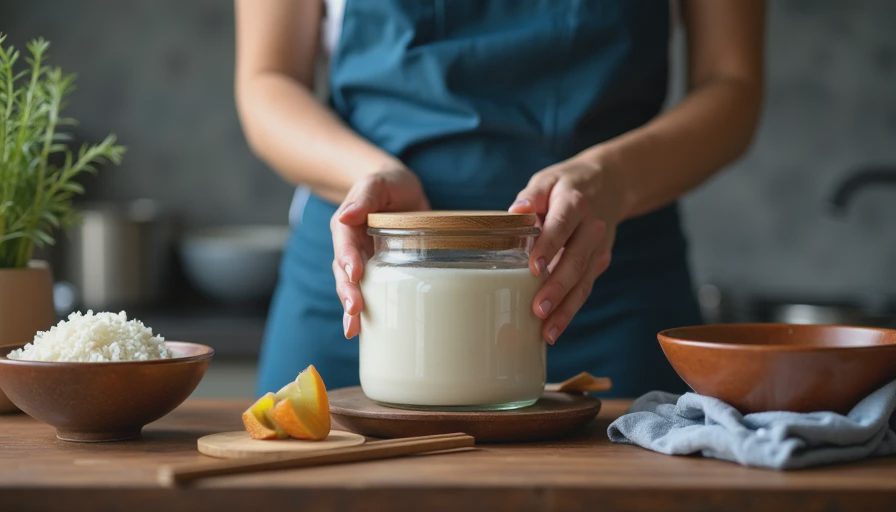
If you want to experiment, make the fermentation of rice water a small, short-term rinse rather than a month-long pantry project. Rinse plain white or brown rice, place it in a clean container with fresh water, and let it stand at room temperature only until a mild tang develops. Depending on the room, that may happen within a day or two. Do not rely on a fixed hour count as proof of safety.
Use clean hands, a clean jar, and fresh water. Strain out the grains, dilute the liquid generously, and store it in the refrigerator. Make only enough for one or two applications. Discard it if you see mold, unusual colors, bubbling that seems excessive, a rotten odor, or a slippery texture that was not present at the start. A sour smell can be expected; a foul smell is a reason to stop.
Do not apply it to broken skin, an irritated scalp, or freshly scratched areas. Keep it away from the eyes, and rinse promptly if it stings. Patch testing a small area behind the ear or on the inner arm can help identify skin sensitivity, although it cannot guarantee that your scalp will tolerate the rinse. People with eczema, psoriasis, or recurring scalp inflammation should ask a dermatologist before using a homemade fermented liquid.
The biggest safety mistake is treating a DIY rinse like a preserved cosmetic. Refrigeration slows microbial growth; it does not sterilize the product. Smell and appearance are also imperfect safety tests. When in doubt, throw it out. A few dollars of rice is cheaper than treating a preventable scalp problem.
What it can and cannot do for different hair types
The fermentation of rice water may feel pleasant on fine, oily, or low-porosity hair that tolerates a light film. That does not mean it will suit everyone. Hair that already feels stiff, rough, tangly, or straw-like may react badly to repeated starch-heavy rinses. Curly and coily hair can be especially sensitive to buildup because residue may collect along bends and make detangling harder.
I would start with a diluted application after shampooing, leave it on for only a few minutes, and follow with a regular conditioner. Use it no more than occasionally at first. If the hair feels squeaky, dry, brittle, or unusually hard to comb, stop rather than adding oil to mask the problem. Oil can improve slip, but it does not remove a residue or correct an irritating formula.
Hair shedding deserves separate attention. Breakage, which produces shorter pieces, is different from shedding from the follicle. A rinse may make the surface feel smoother, but it has not been shown to replace medical evaluation for sudden shedding, bald patches, or scalp pain. Those signs need a clinician, not a stronger kitchen recipe.
Read the label before buying a similar product
When you see the fermentation of rice water advertised in a bottle, read the complete ingredient list instead of stopping at the front label. Look for the actual INCI name, such as Oryza Sativa Extract or Oryza Sativa Bran Extract. “Rice water” is a marketing phrase, not a standardized ingredient name. The placement of the ingredient also matters: an ingredient near the end is usually present at a lower level than one near the beginning.
Then look for the rest of the formula. Water, humectants such as glycerin or propanediol, conditioning agents, fatty alcohols, and preservatives tell you far more about performance than a single trendy extract. A rinse with rice extract and a well-built conditioning system may detangle better than a homemade version because it has ingredients designed to reduce friction.
Preservatives are not automatically bad news. Phenoxyethanol, sodium benzoate, potassium sorbate, and other preservation systems help prevent bacteria, yeast, and mold from growing in a water-based product. The appropriate system depends on the formula's pH and packaging. If a product claims to be water-based but has no recognizable preservation strategy, I become cautious.
Also distinguish a cosmetic claim from a medical one. “Helps hair feel smoother” is a reasonable cosmetic promise. “Stops hair loss” is a much larger claim that a rinse cannot support on its own. The fermentation of rice water can be an interesting ingredient story, but it should not be used to create fear about ordinary shampoo or conditioner.
A practical decision for your wash day
Before trying the fermentation of rice water, assess your starting point. If your hair is healthy but you enjoy a low-cost experiment, a diluted, freshly prepared rinse used occasionally is a reasonable option. If your hair is dry or damaged, choose a conditioner with proven slip and a balanced formula first. If your scalp is reactive, skip the homemade version and use a tested product designed for sensitive skin.
Take a baseline photograph and note how your hair feels before and after one use. Pay attention to combing, tangling, shine, stiffness, scalp comfort, and how quickly buildup appears. This simple comparison is more useful than promising yourself dramatic growth. Hair grows according to the follicle's cycle, while a surface rinse mainly changes feel and appearance.
My formulator's conclusion is straightforward: the fermentation of rice water is neither magic nor nonsense. It can produce a mildly acidic, starch-containing rinse that some people enjoy, but it is variable and perishable. Make small batches, use clean tools, dilute it, and stop at the first sign of irritation. If you buy a commercial product, read the label and judge the whole formula. Read the label before you buy the bottle.





No notes yet — write the first one.