When someone asks me about seen fragrance free leave-in conditioner, I usually begin with the label, not the marketing copy. A fragrance-free product can be a thoughtful choice for a sensitive scalp, scent fatigue, or anyone who simply does not want perfume lingering in their hair. But “fragrance-free” does not tell you whether the formula is rich, light, silicone-based, protein-containing, or suitable for your curl pattern. Those details are found in the ingredient list.
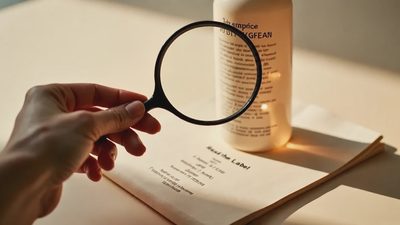
I spent years reading formulas from the inside of a lab, and I still think the best haircare habit is wonderfully simple: read the label before you buy the bottle. Here is how I would evaluate this type of leave-in conditioner without turning a normal shower routine into a chemistry exam.
What fragrance-free actually means
Fragrance-free generally means the formula is made without added fragrance ingredients intended to create a scent. That is different from unscented. An unscented product can contain masking ingredients that cover the smell of other raw materials, while a fragrance-free formula does not need to hide those odors in the same way. Always look at the ingredient list if fragrance avoidance is important to you.
You may still notice a mild raw-material smell. Plant oils, preservatives, conditioning agents, and botanical extracts each have their own odors, and a fragrance-free product does not have to smell like nothing. A faint clean, waxy, or ingredient-like scent is not automatically a problem. It is simply the formula without a perfume composition covering it.
The phrase also does not mean hypoallergenic, irritation-proof, or suitable for every scalp. A person can react to many different ingredients, including preservatives or essential oils. Essential oils are often marketed as natural fragrance, but they can still contribute scent and sensitivity concerns. In a formula review, I look for the complete ingredient list rather than relying on a front-label promise.
Reading the conditioning system
The most useful part of seen fragrance free leave-in conditioner is not one magical ingredient. It is the balance among water, humectants, conditioning agents, oils, and film-formers. Water is usually the first ingredient because it provides the liquid base. Humectants such as glycerin or propanediol help attract and hold moisture, although their performance depends on the rest of the formula and the surrounding humidity.
Conditioning ingredients help hair feel smoother by reducing friction between strands. Cationic ingredients are especially common in rinse-off and leave-in products because they are attracted to the negatively charged areas of damaged hair. In plain English, they help detangle and reduce that rough, grabby feeling after washing.
You may also see silicones or silicone-like materials. These can improve slip, shine, and combability while forming a light coating over the fiber. “Silicone-free” is not automatically better, just as “silicone” is not automatically bad. The useful question is whether your hair benefits from the feel and whether your cleanser routine removes the buildup you experience.
Matching the formula to your hair
For fine or easily weighed-down hair, begin with a small amount on damp ends. A dime-sized portion is often enough for shoulder-length hair, while very long or dense hair may need more. Apply from the ears downward rather than placing a creamy leave-in directly on the scalp. This keeps the roots from looking flat and makes it easier to adjust the dose.
Medium-to-thick hair often needs more lubrication, especially after coloring, heat styling, or frequent brushing. Seen fragrance free leave-in conditioner can be spread through sections with your fingers or a wide-tooth comb. I like to smooth it over the outside of each section first, then gently rake through the interior. That approach distributes product without piling everything onto the same few strands.
Curly and coily hair may respond well to a leave-in applied while the hair is very wet. Water gives the product something to distribute through, and wet application can reduce pulling during detangling. If your curls become limp, use less and keep the product away from the roots. If the ends still feel rough once dry, add a little more only to those ends on the next wash day.
Why the ingredient list matters more than the claim
A product can be fragrance-free and still feel heavy, light, creamy, or slippery. Those sensory differences come from the complete formula. For example, a product with several rich emollients may feel protective on coarse hair but leave fine hair looking oily. A formula with more water, humectants, and lightweight conditioning materials may give fine hair movement while offering less protection for very porous ends.
This is why I would not judge seen fragrance free leave-in conditioner by the absence of perfume alone. Check the first five to ten ingredients, then scan the rest for ingredients you already know your hair likes or dislikes. If you avoid protein, look for hydrolyzed proteins. If your scalp reacts to essential oils, scan for familiar aromatic plant oils. If you have a known allergy, compare the full list with your personal trigger list.
Ingredient order is useful, but it is not a perfect measurement of performance. Ingredients used at low levels can still matter, and some specialized conditioning materials work effectively in small quantities. The list gives you clues; your hair’s response supplies the final evidence.

A practical wash-day test
When testing seen fragrance free leave-in conditioner, do not change your shampoo, mask, styling product, and drying method on the same day. If you alter everything at once, you will not know which change caused the result. Use your normal shampoo, squeeze out excess water, and apply a measured amount to one side of your hair first.
Compare the treated side after drying. Look for easier combing, less frizz, manageable softness, and whether the hair still has body. Also notice what happens the next morning. Hair that feels silky immediately but looks greasy or stringy later may need a smaller amount. Hair that feels smooth but becomes brittle at the ends may need more conditioning or a richer product on occasional wash days.
Give the test two or three washes unless you experience itching, burning, swelling, or a clear rash. Stop using a product if you have a concerning reaction and seek medical advice when appropriate. Most ordinary formula testing is simply about observing feel and appearance, not enduring discomfort to prove a product works.
Common mistakes to avoid
The first mistake is using too much because leave-in conditioner feels light in your palm. Hair absorbs and distributes product differently from skin, and excess can collect around the nape, behind the ears, or at the ends. Start small; adding another pea-sized amount is easier than removing a heavy coating.
The second mistake is applying leave-in only to the surface. The outer layer may look polished while the interior remains tangled. Work in sections, especially if your hair is dense or curly. The third mistake is confusing softness with moisture. A conditioning film can make hair feel smooth, but it does not replace water in the fiber or repair structural damage. Haircare products improve manageability; they cannot permanently reverse split ends.
Finally, do not assume a higher price guarantees a better result. Seen fragrance free leave-in conditioner should earn its place through performance, ingredient transparency, and compatibility with your routine, not through a luxury story on the package.
My label-reading conclusion
Seen fragrance free leave-in conditioner makes the most sense for shoppers who want conditioning without added perfume, but the right choice still depends on dose, hair density, porosity, and styling habits. Read beyond the front label, identify the conditioning system, and test a modest amount on damp hair. If the result is smooth without heaviness, detangled without residue, and comfortable on your scalp, you have useful evidence that the formula fits.
That is the part of formulation science I wish more packaging explained: no single claim can predict the entire experience. A label gives you the map, but your own wash-day test tells you where the road actually goes.
No notes yet — write the first one.