If you have ever searched whats petrolatum while standing in the hair-care aisle, you are not alone. The name sounds technical, but the ingredient is one of the simplest materials a formulator can use. Petrolatum is a highly purified, semi-solid blend of hydrocarbons made from petroleum refining. In plain English, it is a thick, water-resistant barrier ingredient. It does not feed the hair, repair a split end, or add water. It helps hold moisture in and reduces friction on the surface.
I used to think of petrolatum as something found only in old-fashioned skin ointments. After writing hundreds of formulas, I learned to read it more practically: what is it doing in this product, how much is present, and will that texture suit the person using it? That is a much better question than treating one ingredient as automatically good or bad.
Whats petrolatum doing in a hair product?
When people ask whats petrolatum, they often want to know whether it moisturizes hair. The short answer is no. Petrolatum is an occlusive, meaning it forms a continuous film that slows water loss from a surface. On skin, that film can protect dry areas from wind and repeated washing. On hair, it can coat the cuticle, increase slip, reduce the rough feeling of dryness, and help a style stay in place.
Think of a strand as a tiny flexible fiber with a layered outer surface. A small amount of a heavy occlusive can make that surface feel smoother because fingers and neighboring strands encounter less drag. This is why petrolatum appears in some pomades, edge products, protective balms, and conditioning creams. It can also add shine, although the shine usually comes with a noticeable, greasy weight.
That distinction matters. A humectant such as glycerin helps attract water, while a conditioner such as behentrimonium chloride improves combing and softness through a different mechanism. Petrolatum mainly sits on top. It is a sealant, not a complete moisture routine.
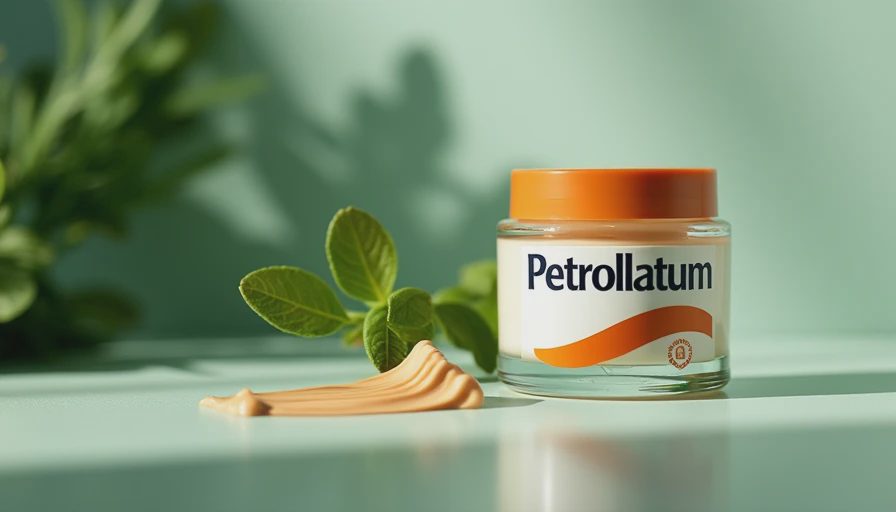
How to read petrolatum on an ingredient label
If you are wondering whats petrolatum looks like on a label, the most direct listing is simply Petrolatum. You may also see related occlusive materials, such as mineral oil, paraffin, or microcrystalline wax, but these are not interchangeable ingredients. Each has a different texture, spread, melting behavior, and contribution to the finished formula.
Ingredient lists generally place materials in descending order by weight until the one-percent threshold, after which the order can become more flexible. If Petrolatum appears near the beginning, expect a rich, substantial product. If it appears near the end, the amount may be small enough to provide a little shine or protection without making the formula feel like a pomade.
Look at the whole list rather than stopping at one word. A product containing water, glycerin, fatty alcohols, cationic conditioners, and a small amount of petrolatum is built differently from a short blend of petrolatum, mineral oil, and fragrance. The first may be a conditioning cream; the second may be a heavy sealant intended for very dry areas or strong styling control.
This is where label reading beats marketing language. Terms such as natural, clean, moisture-locking, and intensive do not tell you the exact performance. The ingredient order and the product texture tell you more.
Is petrolatum safe for hair and scalp?
A common version of the whats petrolatum question is whether the ingredient is safe. Cosmetic-grade petrolatum is highly refined and purified for its intended use. In the United States, it is also used in certain over-the-counter skin-protectant products under regulated conditions. That does not mean every person will love its feel, but it does mean the ingredient should not be judged by the word petroleum alone.
The more useful concern is application. A heavy product applied directly to the scalp can feel uncomfortable, especially if the scalp is oily, sensitive, or prone to buildup. Petrolatum is not a treatment for dandruff, scalp infection, hair loss, or inflammation. It can also make it harder to assess what is happening underneath a thick layer of product. If your scalp is persistently itchy, painful, or flaky, use an appropriate scalp product or seek professional advice rather than covering the symptoms.
For hair lengths, the question is usually cosmetic. Does the product make your strands softer and easier to manage, or does it leave them flat and coated? Both outcomes are possible, depending on dose, hair density, porosity, and the rest of the formula.
Who might benefit from petrolatum?
Petrolatum can be useful for very dry, coarse, highly textured, or tightly styled hair that needs a durable protective film. A tiny amount on the ends can reduce the rough sensation caused by friction from clothing, pillowcases, or repeated handling. It can also help hold a sleek style or smooth flyaways around an updo.
People with dense curls sometimes use a petrolatum-containing product over a water-based leave-in and conditioner. That layering approach makes sense because the lighter products provide water, slip, or softness, while the occlusive helps slow evaporation. The order is important: applying a thick sealant to completely dry, brittle hair may improve surface feel without actually adding hydration.
Fine hair usually needs more caution. A pea-sized amount can be far too much for short or low-density strands. Start with less than a pea, warm it between your fingertips, and touch only the ends or the outer surface. You can always add more; removing an oversized coating usually requires a thorough wash.
Whats petrolatum compared with petroleum jelly?
When people ask whats petrolatum, they are often asking about petroleum jelly because the two terms are closely connected. Petrolatum is the standardized ingredient name used on cosmetic and personal-care labels. Petroleum jelly is a common product name for a semi-solid preparation whose primary material is petrolatum, although a finished product can include additional ingredients such as fragrance or stabilizers.
That means a jar labeled petroleum jelly is not automatically identical to a hair pomade labeled Petrolatum. The final performance depends on concentration and the other materials in the formula. A wax, ester, silicone, fragrance, or conditioning agent can change spreadability and the way the coating feels after several hours.
This is also why copying a skin-care product onto the hair is not always ideal. A plain ointment may protect skin beautifully but feel sticky, transfer to fabric, or make hair look wet. A hair product may use a smaller amount alongside waxes and conditioners to create control with a more manageable finish.
How to use it without creating a heavy buildup
Start with clean, damp or lightly moisturized hair when your goal is softness and moisture retention. Use a very small amount, distribute it between your palms, and press it onto the ends first. For edges, use a fingertip-sized smear rather than repeatedly dragging a large amount across the hairline. If you are styling a full head, section the hair so you can apply less evenly.
Wash frequency depends on the amount used and your personal routine. A gentle shampoo may remove a light film, while repeated heavy applications can require a more cleansing wash. That is not a reason to scrub aggressively. Use enough shampoo to emulsify the product, work it through the areas where you applied it, and rinse thoroughly. Follow with conditioner if the hair feels rough afterward.
If your hair looks dull, separates into stringy pieces, or feels coated even after conditioning, take a break from heavy sealants. A clarifying shampoo used occasionally can help remove accumulated styling residue, but frequent use can leave some hair dry. Balance is the goal, not a war against one ingredient.
The practical answer for your next shopping trip
So, whats petrolatum in the most useful everyday sense? It is a purified, heavy occlusive that protects and smooths by forming a water-resistant film. It can be helpful in the right formula and frustrating in the wrong amount. It does not replace water, a conditioner, or a scalp treatment, and it does not need to be feared simply because its source is petroleum.
Read the label before you buy the bottle. Check where Petrolatum appears, notice the texture you want, and choose your application area deliberately. If your hair is coarse or very dry, a small amount may provide welcome protection. If your hair is fine or easily weighed down, a lighter leave-in, silicone serum, or conditioning spray may give you better results. The ingredient is only one part of the formula; your routine and dosage decide whether it performs well.





No notes yet — write the first one.