If you’ve bought shampoo in the past five years, you’ve heard this line:
“You must go sulfate‑free.”
Brands print it in bold on the front label. Influencers recite it as the first rule of good hair care. Even strangers in the drugstore aisle might tell you that sulfates will ruin your hair.
I understand the panic. For a long time, I nodded along too – not because I had tested it myself, but because “sulfate‑free” had become the industry’s unquestioned gospel.
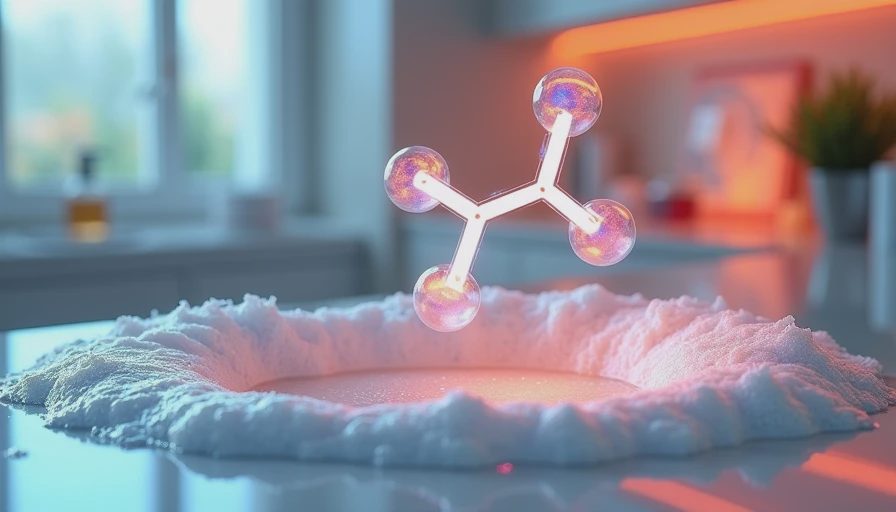
But today, I want you to step away from the marketing noise and join me back at the lab bench. Let’s take a real, calm look at Sodium Lauryl Sulfate (SLS) – its molecule, its job, and its reputation.
Here’s the truth: Sulfates are not villains. They are just heavily misunderstood cleaners.
First Things First: What Does SLS Actually Do?
Skip the scary chemical names. SLS is a surfactant – a surface‑active agent.
Its molecule has two ends: one loves water, the other loves oil. When you massage shampoo into wet hair, SLS molecules grab onto the excess sebum and styling residue on your scalp, while the water‑loving end lets everything rinse away.
In plain English: it’s the best grease‑remover in your shampoo.
The dirt, pollution particles, and natural oils that build up on your scalp – plain water can’t budge them. You need something like SLS to pull them off. Without it, many shampoos would leave your hair feeling greasy and limp, no matter how much you lather.
So Why Is Everyone Afraid of It?
The fear around sulfates comes from two reasons – one overblown, one legit.
1. The Overblown Reason: Bubbles = Harsh?
Many people equate “lots of foam” with “harsh on skin.” That’s an instinctive, but chemically shaky, assumption. Foam is mostly about the sensory experience (we feel clean when we see suds). SLS does create rich lather, but lathering power and skin irritation aren’t perfectly correlated in chemistry.
2. The Real Reason: It Cleans Everything
Here’s the honest truth I learned over eight years of formulating: SLS is so effective that it doesn’t just remove dirt – it also strips away some of your scalp’s natural moisturising factors (NMF) and intercellular lipids that your skin produces to protect itself.
If your hair is fine, limp, and oily, that strong cleanse feels amazing – your scalp feels fresh, your roots have volume.
But if you have a dry scalp, damaged hair, or naturally curly/coily hair, SLS will leave your strands feeling like straw, because it’s removed the protective oil layer that keeps the cuticle smooth.
Think of it like using a heavy‑duty kitchen degreaser on a wooden floor – it gets the floor clean, but it also roughens the wood.
How Do I Know if I Should Use Sulfates?
This is the question I hear most often as a consulting formulator. I won’t give you a blanket “never” or “always”. Instead, match your profile to the table below:
Your Hair Type | Sulfate Recommendation |
|---|---|
Oily scalp, fine/flat hair – needs daily washing to look fresh | Go ahead. Use an SLS‑based shampoo 3–4 times a week for oil control and root lift. |
Dry scalp, mild flaking (non‑medical) | Avoid. SLS can worsen dryness and accelerate shedding of dead skin cells (more flakes). |
Chemically treated, bleached, or highly damaged hair | Stay away. The cuticle is already lifted; SLS can penetrate those gaps and irritate the cortex. |
Naturally curly / coily (type 3B and above) | Limit or avoid. Curly hair struggles to get natural oils down the shaft; removing what little remains is a recipe for frizz. |
Remember this logic: “Contains sulfates” ≠ “bad”. “Sulfate‑free” ≠ “superior”. It all depends on what your scalp needs and what it can’t tolerate.
What a Formulator Does to Tame SLS
Here’s an insider secret: when I wrote formulas in the lab, we didn’t treat SLS as a problem to eliminate. Instead, we balanced its “aggressiveness” with two classic moves:
Pair it with milder co‑surfactants – like Cocamidopropyl Betaine. This combo maintains cleaning power while significantly lowering the irritation potential on your scalp.
Add enough emollients – if you see Dimethicone or various natural oils appear near the top of the ingredient list (after SLS), the formulator has already predicted the dryness and added “bodyguards” to offset it.
So the real question isn’t whether SLS is present – it’s where it sits on the list and what else is alongside it.
My Final Take (Read the Label)
I will never put SLS on my personal “never again” list. On sweaty summer weekends (after a long tennis match), I deliberately reach for a sulfate shampoo to get my scalp squeaky clean.
But if I’ve just done a protein treatment, or if it’s autumn and my scalp feels sensitive, I switch to a gentle, sulfate‑free cleanser.
What’s “toxic” isn’t the ingredient itself – it’s blindly following trends without considering your own hair.
Next time you pick up a shampoo bottle, don’t stop at the giant “0% SLS” badge on the front. Flip it over. Read the full ingredient list.
If it’s too strong, you don’t have to throw it away – just use it less often.
If it’s too mild, you don’t have to dismiss it – just schedule a deep‑clean shampoo once a week.
Learn to negotiate with ingredients, not to be pushed around by marketing. That’s the real reason I started The Ingredient Decoder.
Read the label before you buy the bottle.





No notes yet — write the first one.