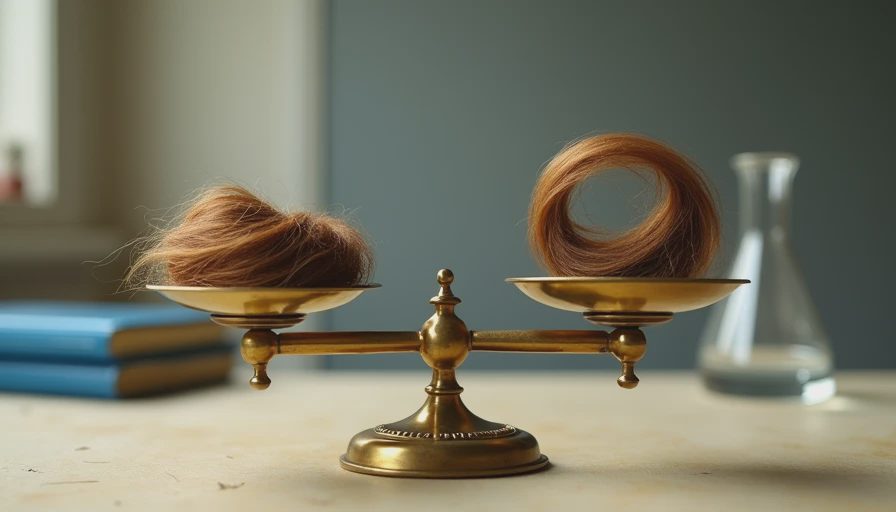
If there's one question I've heard more than any other – in the lab, at dinner parties, and in my DMs – it's this:
"My hair feels dry and brittle. Do I need protein or moisture?"
And the answer I always give is the one nobody wants to hear:
"It depends. And if you guess wrong, you'll make it worse."
I'm not saying that to scare you. I'm saying it because I've seen too many people load up on protein treatments when their hair was already stiff as cardboard, or drench their hair in heavy oils when what it actually needed was structural reinforcement.
Here's the truth: protein and moisture are not enemies. They're partners. But they do completely different jobs, and your hair needs both – just not at the same time, and not in the same amounts.
Let's break this down the way I used to explain it to junior formulators in the lab. No fluff. No buzzwords. Just chemistry you can feel.
First: What Is Hair Made Of?
To understand protein vs. moisture, you need to understand what hair actually is.
Your hair shaft is made of keratin – a fibrous structural protein. Think of it like a rope: millions of protein chains are twisted together, held by chemical bonds (disulfide bonds, hydrogen bonds, salt bonds).
Surrounding this protein core is the cuticle – a layer of overlapping scales that protect the inner cortex.
When your hair is healthy:
The cuticle lies flat (scales closed).
The protein core is intact and flexible.
Water and natural oils move in and out at a normal rate.
When your hair is damaged:
The cuticle lifts (scales open).
Protein chains break or unravel.
Water escapes too quickly, or floods in too fast.
That's where protein and moisture treatments come in. They each address a different type of "brokenness."
Moisture: The Hydration That Keeps Hair Flexible
What it is: Moisture is water – plain and simple. But in hair care, "moisture" usually refers to water + humectants (ingredients that attract water, like glycerin, aloe vera, honey, or panthenol) and emollients (oils and butters that seal that water in).
What it does: Water molecules slot themselves between the protein chains, acting like a lubricant. They keep the hair flexible, bouncy, and elastic.
What happens when you lack moisture:
Hair feels dry, rough, or "straw-like."
It lacks shine.
It tangles easily.
It breaks when you pull it gently (low elasticity).
What happens when you have too much moisture (over-moisturised):
Hair feels mushy, gummy, or overly soft.
It stretches and stretches when wet but doesn't spring back.
It lacks body and feels limp.
Think of moisture as water for a sponge. A dry sponge is hard and crumbles. A fully soaked sponge is soft and flexible. But a sponge that's been sitting in water for days? That falls apart when you squeeze it.
Protein: The Structural Reinforcement
What it is: Protein treatments contain hydrolysed proteins – keratin, collagen, wheat protein, silk protein, or oat protein. "Hydrolysed" just means the protein molecules have been broken down into smaller fragments small enough to temporarily bind to your hair's own protein structure.
What it does: Protein fills in the gaps where your hair's natural keratin has been damaged or stripped away. It temporarily patches up those broken bonds, adding structure, strength, and rigidity.
What happens when you lack protein:
Hair feels limp and weak.
It stretches excessively when wet and doesn't return to its original length.
It breaks easily, especially when brushing or styling.
The hair shaft feels "mushy" (like overcooked pasta).
What happens when you have too much protein (protein overload):
Hair feels stiff, brittle, or "crunchy."
It snaps rather than stretches.
It lacks shine and feels rough.
It tangles because the cuticle is lifted and rigid.
Think of protein as rebar in concrete. It gives the structure its strength and shape. But if you pour too much rebar and not enough concrete mix, the whole thing becomes brittle and cracks under pressure.
The "Bounce Test": How to Diagnose Your Hair Right Now
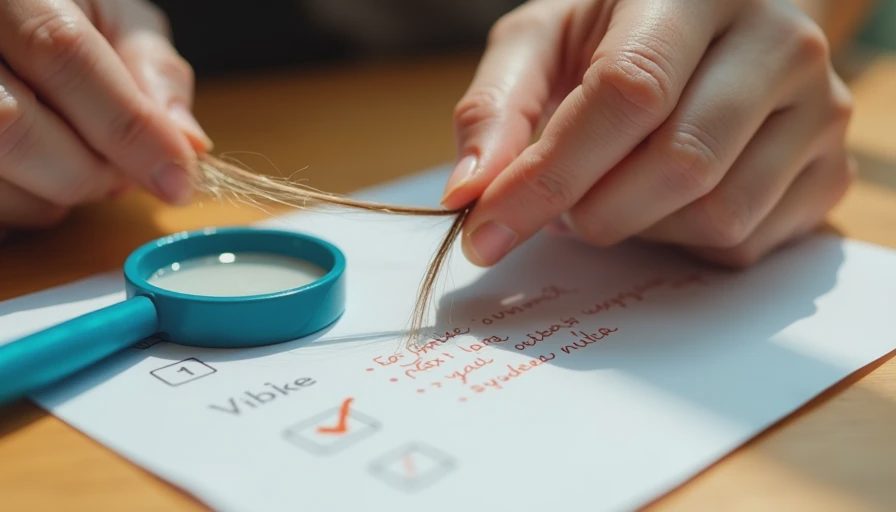
I'm going to give you a simple diagnostic that works better than any app or quiz.
Take a single wet strand of hair (right after washing, before any product).
Gently stretch it between your fingers.
Release it and watch what happens.
What It Does | What It Means | What You Need |
|---|---|---|
Stretches a little (about 20–30%) and springs back | Perfect balance. Healthy elasticity. | Keep doing what you're doing. |
Stretches a lot (50%+), feels gummy, and doesn't return | Too much moisture, not enough protein. | Protein treatment (1–2 times). |
Stretches very little (less than 10%), then snaps | Too much protein, not enough moisture. | Deep moisture mask (no protein). |
This test isn't foolproof (porosity and damage patterns matter), but it's the closest thing to a lab-grade "reading" you can do at home without a tensile strength machine.
The Formulator's Rule of Thumb
Here's how I used to think about protein vs. moisture when I wrote formulas:
Damaged hair = more protein.
Dry hair = more moisture.
Damaged and dry hair = protein first, then moisture.
If your hair is chemically damaged (bleach, perm, relaxer), the protein chains are literally broken. You need to patch those structural holes first. Then you seal in the moisture.
If your hair is just dry – no chemical damage, just environmental dehydration – you don't need protein. You need water, humectants, and a good occlusive (oil or silicone) to lock it in.
And if your hair is both? Do a protein treatment on wash day. Then follow with a deeply moisturising conditioner that does not contain protein.
How to Read Labels for Protein and Moisture
I know you're here to read the bottle, so let's do exactly that.
Look for protein ingredients (these are your "builders"):
Hydrolysed Keratin
Hydrolysed Collagen
Hydrolysed Wheat Protein
Hydrolysed Silk Protein
Hydrolysed Oat Protein
Amino Acids (any kind)
Keratin
If you see one or two of these in the mid-to-bottom of the list, that's a maintenance dose. If you see several near the top, it's a strong treatment formula.
Look for moisture ingredients (these are your "hydrators + sealers"):
Humectants (attract water):
Glycerin
Panthenol (Pro-Vitamin B5)
Aloe Barbadensis (Aloe Vera) Leaf Juice
Honey / Sodium Hyaluronate
Propylene Glycol
Emollients / Occlusives (seal water in):
Natural oils (Argan, Jojoba, Coconut, Avocado, etc.)
Butters (Shea, Mango, Cocoa)
Fatty alcohols (Cetyl Alcohol, Stearyl Alcohol)
Silicones (Dimethicone, Cyclomethicone)
A good moisturising product will have both humectants and occlusives.
My Simple Protocol for Balancing Protein and Moisture
I don't believe in complicated routines. Here's what I recommend to my consulting clients (and what I do myself):
Frequency | Action |
|---|---|
Every wash (1–2x per week) | Use a balanced conditioner – one that contains some protein, but not as the star ingredient. This maintains elasticity without tipping the scale. |
Once a month (or when hair feels weak) | Swap in a dedicated protein treatment (like a reconstructor mask). Use it on clean, towel-dried hair. Leave on for 3–5 minutes (follow the instructions – overdoing time doesn't increase effect). |
After a protein treatment | Always follow with a deep moisturising conditioner (no protein). This rehydrates the structure you just reinforced. |
When hair feels stiff or crunchy | Skip protein entirely. Use a deep moisture mask for your next 2–3 washes. |
The One Thing Nobody Tells You
Here's the dirty secret I learned after years in the lab:
Most drugstore conditioners already contain both protein and moisture in a roughly balanced ratio.
The "protein overload" crisis you read about online? It almost always comes from using multiple protein-heavy products in the same routine – a protein shampoo, a protein conditioner, a protein leave-in, and a protein styling cream. That's overkill.
If you're using a single, well-formulated conditioner and a single styling product, you are extremely unlikely to ever overload on protein.
The marketing industry wants you to believe you need a cabinet full of treatments. You don't. You need one good conditioner, one good deep mask, and the judgment to know which one to reach for.
My Final Take
Protein gives your hair strength. Moisture gives it flexibility.
Neither is better. Neither is worse. They're just different tools for different problems.
When your hair stretches like a rubber band and won't snap back – it needs protein.
When your hair snaps like dry twigs and won't bend – it needs moisture.
And when in doubt? Do the wet stretch test. Then read the label. Then choose accordingly.
Your hair isn't a science experiment – but it is chemistry. And chemistry, once you understand the rules, is remarkably simple.
Read the label before you buy the bottle.





No notes yet — write the first one.