If you have ever read a conditioner, hair oil, or leave-in spray label and wondered about coco caprylate, you are looking at a lightweight emollient. In plain language, it helps hair feel smoother, softer, and less sticky without the heavy drag of some traditional oils. I used ingredients like coco caprylate in finished formulas, and the useful question is not whether the name sounds natural. It is how the ingredient behaves in the entire formula and on your hair.
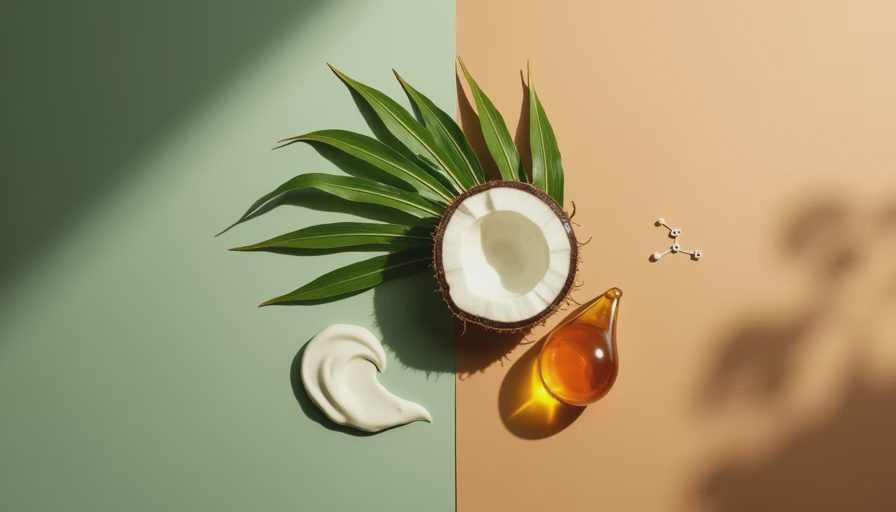
The name comes from the raw materials used to make it. Coco points to fatty materials associated with coconut, while caprylate refers to a fatty acid portion. The finished ingredient is not the same thing as pouring coconut oil onto your strands. It is a refined cosmetic material designed for a more predictable texture, spread, and finish.
What coco caprylate does in a hair formula
Coco caprylate is primarily an emollient, which means it helps fill in the rough feel between fibers and leaves a more lubricated surface. In a conditioner, that can translate to easier combing and less friction while detangling. In a serum, it can help the product spread across the hair instead of sitting in one concentrated patch.
It is also valued for a dry, silky after-feel. “Dry” does not mean drying out your hair. It means the ingredient can feel less greasy than heavier oils such as castor oil or some dense butters. A formulator may choose coco caprylate when a product needs slip and shine but should still feel comfortable on fine or easily weighed-down hair.
That difference is easiest to notice in a before-and-after comparison. A rich oil may make coarse ends look glossy but can leave fine hair flat by lunchtime. A formula containing coco caprylate may give a lighter veil of smoothness, especially when used in a spray, cream, or silicone-free styling product. The result still depends on the concentration and the other ingredients around it.

Is coco caprylate the same as coconut oil?
No. This is one of the most common label misunderstandings. Coconut oil is a natural triglyceride oil with its own fatty acid profile, melting behavior, and feel. Coco caprylate is an ester made by chemically combining alcohol and fatty acid components. “Ester” sounds technical, but it simply describes the structure created during manufacturing.
The distinction matters because two ingredients can share a source association while behaving very differently. Coconut oil can feel rich, coat the hair strongly, and work well for people who like pre-shampoo oiling. Coco caprylate is generally chosen for a lighter, more elegant finish. Neither is automatically better. They are tools for different formula goals.
I also would not treat the word “coco” as proof that a product contains a large amount of coconut oil. Ingredient names describe identity, not marketing imagery. Read the full INCI list before deciding what the product is likely to feel like.
How to find it on an ingredient label
Look for coco caprylate in the ingredient list, usually among the middle or later ingredients in a leave-in, hair oil, conditioner, or styling cream. Ingredient lists are generally arranged from higher to lower concentration, although ingredients used at very low levels can appear in a less strict order near the end.
If coco caprylate appears near the top, the product may have a notably silky, spreading texture. If it appears near the bottom, it can still contribute to the finish, but the formula’s main conditioning effect probably comes from other materials. Look nearby for ingredients such as behentrimonium chloride, cetrimonium chloride, fatty alcohols, silicones, plant oils, or film-forming polymers. The complete group tells you much more than one ingredient name.
For example, a lightweight leave-in with water first, a conditioning agent next, and coco caprylate in the middle may feel very different from a concentrated serum where coco caprylate sits beside several oils. Same ingredient, different delivery system.
Who might like the feel?
Coco caprylate can suit fine, medium, or coarse hair, but the amount and product format matter more than the ingredient alone. Fine hair often benefits from a mist or light cream containing a small amount. Apply it from mid-length to ends, then wait a few minutes before adding more. Starting with one pump or a few sprays prevents the common mistake of treating a lightweight product as impossible to overapply.
Medium and coarse hair may prefer it in a richer cream, especially when the formula also includes fatty alcohols, cationic conditioners, or a small amount of silicone. Those ingredients can provide more lasting detangling and protection from combing friction. Coco caprylate can improve the sensory finish without having to carry the entire conditioning job.
If your scalp becomes oily quickly, keep this type of product away from the roots at first. Hair that feels limp does not necessarily mean you are sensitive to coco caprylate; it may simply mean the product is too rich, too concentrated, or being applied too close to the scalp.
Does it moisturize or repair damaged hair?
Coco caprylate does not add water to the hair in the same way a humectant-containing formula can, and it cannot permanently repair split ends. Its job is mostly surface conditioning: improving slip, reducing the rough sensation, and making strands look more polished temporarily.
That temporary benefit is still useful. Damaged hair often tangles because the cuticle surface is irregular. A lubricating ingredient can reduce the force needed to comb through those tangles. Less pulling can help you avoid additional mechanical breakage during wash day. For lasting improvement, pair a product with coco caprylate with gentle cleansing, regular conditioning, careful heat use, and trimming when ends are truly split.
Pay attention to claims such as “repairs,” “restores,” or “bond building.” Those claims refer to different technologies and should not be credited to coco caprylate by itself. Read the whole formula before assigning one ingredient too much power.
How I would test a product containing it
Start with clean, damp hair and apply the smallest practical amount to one side of your head. Use the other side as a comparison. Let the hair dry fully, because wet hair can hide excess product and make almost any conditioner feel smooth.
Check three things later that day: whether the ends feel soft, whether the hair separates into clean strands instead of clumping, and whether the finish still looks fresh after several hours. On the next wash, adjust the amount rather than immediately blaming the ingredient. Half the amount often gives a clearer answer.
If your hair remains coated or flat, try using the product only on the last few inches, or choose a lighter format. If the hair feels rough, the formula may need more conditioning support than coco caprylate alone provides. A patch test on skin is sensible for any new cosmetic product, particularly if you have a history of reactions.
The bottom line is simple: coco caprylate is a useful texture and conditioning ingredient, not a miracle treatment and not a warning sign. It can make a formula feel silky, spread evenly, and leave hair looking polished without the heavy finish some oils create. Read the label before you buy the bottle, then judge the complete formula against your own hair’s response.





No notes yet — write the first one.